
When you start researching veterinary website design companies, you’ll see a lot of beautiful portfolios. Sleek designs, modern layouts, professional photography. But here’s what most of those companies won’t tell you about what actually converts pet owners into clients.
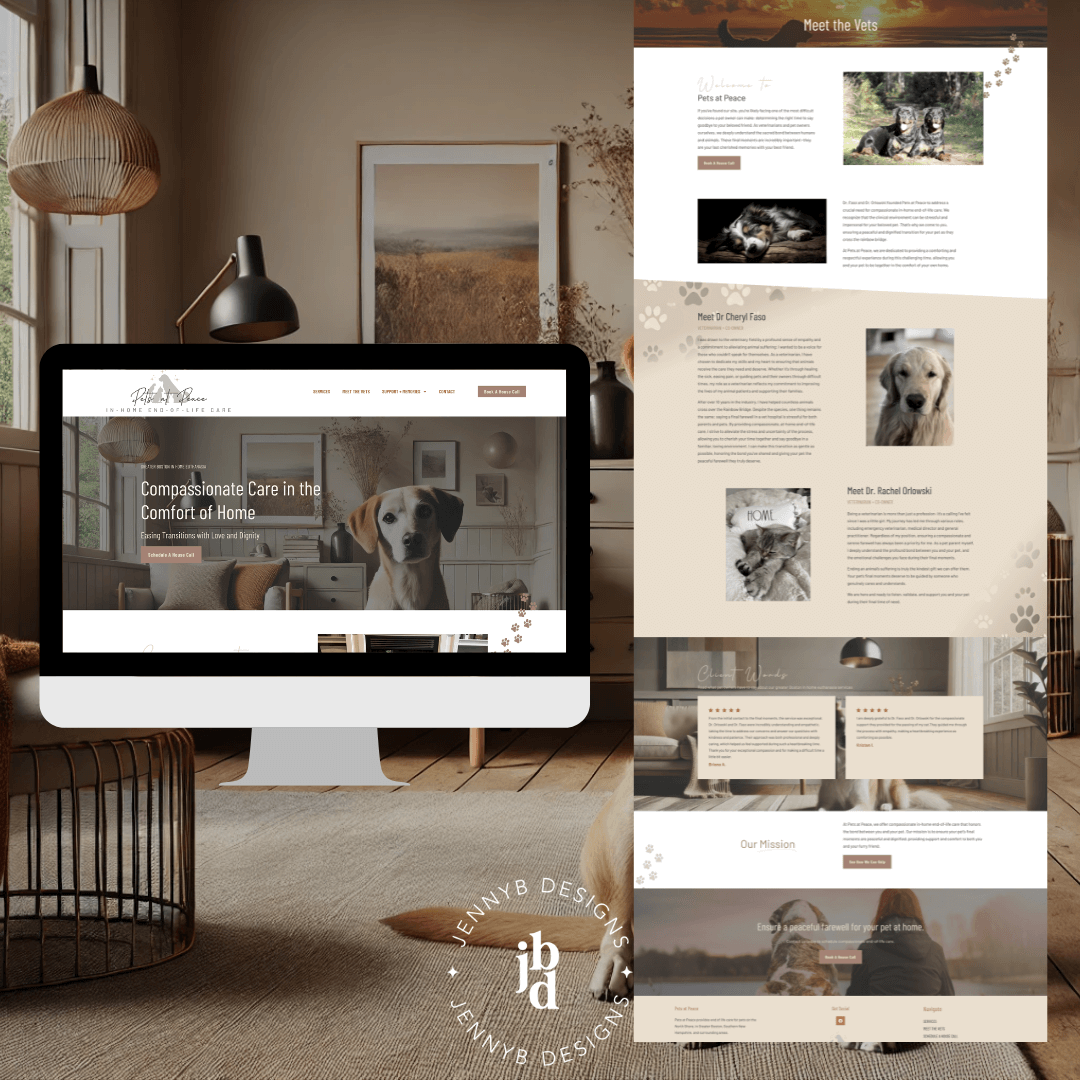
I learned this working with Rachel of Pets at Peace, an in-home end-of-life care practice for pets. When she came to me, she’d already tried the DIY route and knew she needed professional help. But she didn’t just need a pretty website. She needed one that would help anxious, grieving pet owners feel confident choosing her during one of the hardest moments of their lives.
The result? She went from 3 clients per month to 12 clients per month in just two months after launch. That’s tripling her business.
The difference wasn’t fancy animations or complex features. It was five strategic elements that most veterinary website design companies overlook because they’re focused on aesthetics instead of conversion.
If you’re evaluating different veterinary website design companies right now, here are the five features you should be asking about. These are the elements that actually build trust and turn website visitors into booked appointments.
1. Cost Transparency Builds Trust When Pet Owners Need It Most
Here’s something most veterinary website design companies will tell you to hide. Your pricing.
The conventional wisdom is that if you show your costs upfront, you’ll scare people away. But when Rachel and I discussed whether to include pricing on her Pets at Peace website, we thought strategically about her client’s emotional state.
Pet owners researching end-of-life care are already anxious. They’re grieving. They’re trying to make the best decision for their companion. The last thing they need is uncertainty about cost.
When we added transparent pricing to Rachel’s website, something interesting happened. The quality of her inquiries actually improved. People who reached out already knew the investment and were ready to move forward. There was no awkward money conversation on that first call. No sticker shock. No ghosting after the consultation.
Cost transparency does three important things for veterinary practices. It pre-qualifies leads so you’re not spending time on consultations with people who can’t afford your services. It builds immediate trust by showing you have nothing to hide. And it removes one barrier to that first contact.
When you’re talking to veterinary website design companies, ask them about their philosophy on pricing display. If they immediately tell you to hide it, that’s a red flag. A strategic designer will help you think through what makes sense for your specific practice and clientele.
For Rachel’s practice, we included starting prices for each service tier. We didn’t hide behind “contact us for pricing.” We were clear and upfront. And it worked.
2. Clear Service Explanations That Answer Questions Before They’re Asked
Most veterinary website design companies will give you a services page with bullet points and generic descriptions. But pet owners don’t just need to know what you offer. They need to understand what working with you actually looks like.
This is especially important for specialized services like end-of-life care, fear-free handling, or holistic veterinary medicine. Pet owners might not even know these services exist or how they differ from traditional veterinary care.
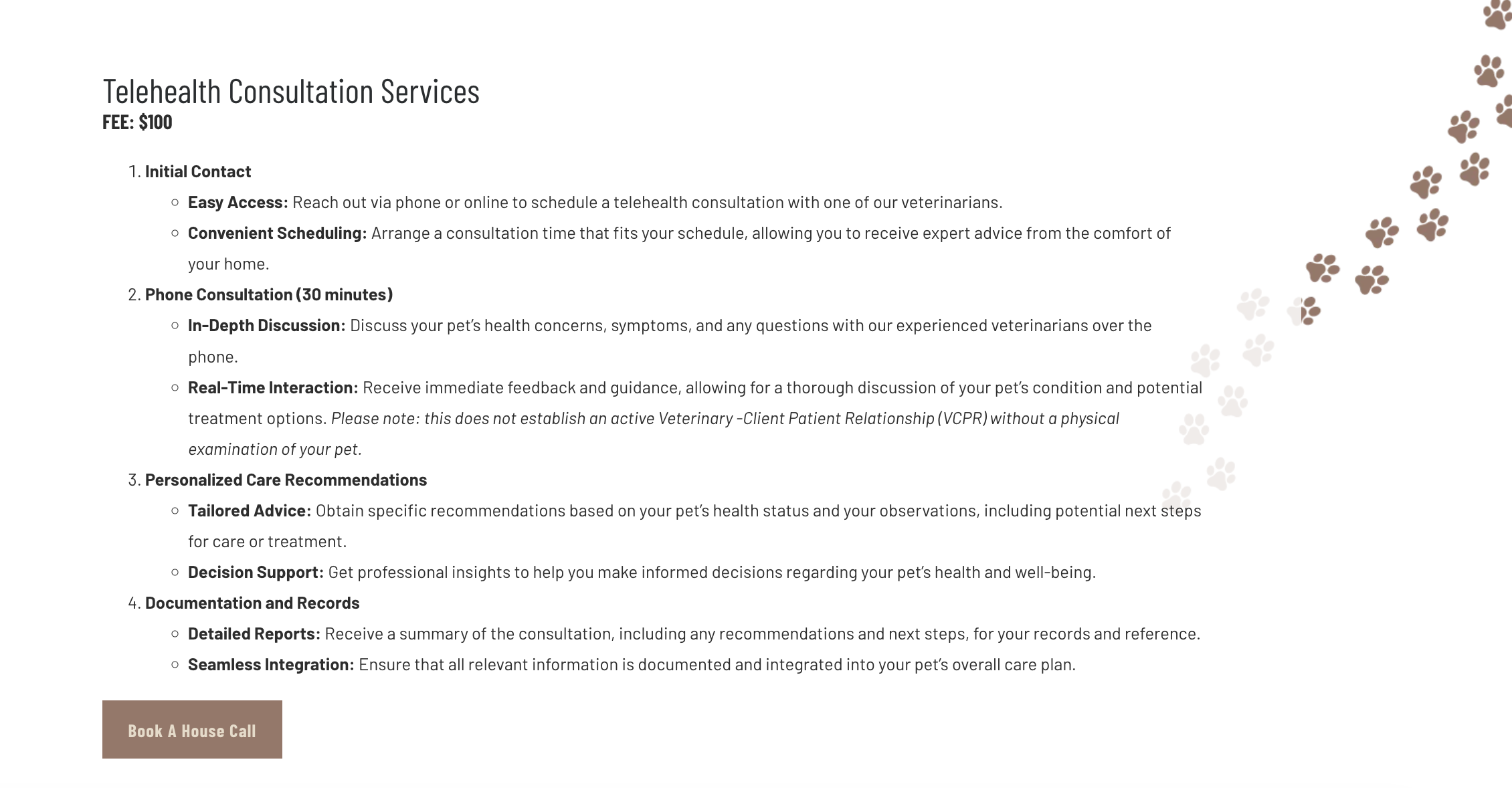
On Rachel’s website, we didn’t just list “in-home euthanasia” as a service. We explained the entire process. What happens when you call. How she prepares for the visit. What the experience looks like for both the pet and the family. What happens after.
We also addressed the questions pet owners were too afraid to ask. Is this the right time? How do I know? What if I’m not ready? Can we do this with kids present? What about other pets in the home?
By answering these questions directly on the website, we did two things. We eased anxiety and built trust by showing Rachel understood exactly what families were going through. And we saved Rachel time on consultations because families arrived already educated about the process.
When evaluating veterinary website design companies, look for ones that ask about your client’s journey. What questions do they have at each stage? What fears or concerns do they bring? A good designer will help you map this out and address it strategically throughout your site.
Your service explanations should include the what, the how, and the why. What you offer, how it works, and why it matters to the pet owner. This level of clarity is what separates a website that informs from one that converts.
3. Memorial and Tribute Features That Extend the Client Relationship
Here’s a feature that most veterinary website design companies would never think to include, but it became one of the most meaningful parts of Rachel’s website.
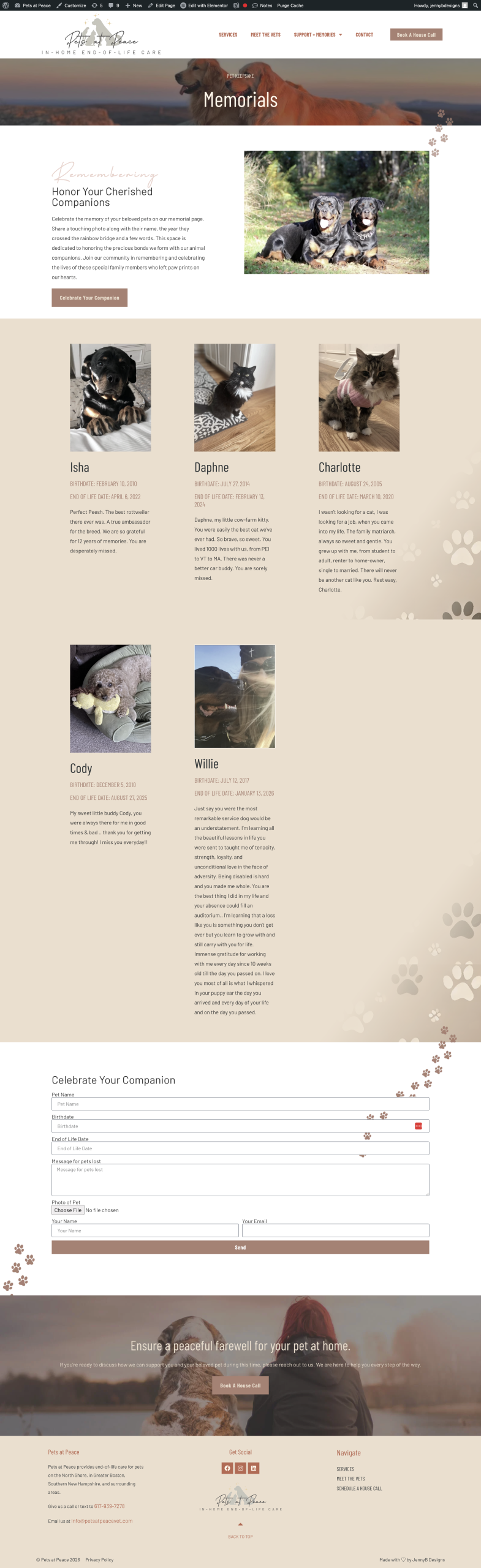
We created a pet memorial page where families could submit photos and memories of their companions. This wasn’t just a nice gesture. It was a strategic tool that extended the client relationship beyond the service itself.
Think about it from a pet owner’s perspective. They’ve just said goodbye to a beloved family member. They’re grieving. They want to honor that relationship. Having a beautiful, dedicated space to do that creates an ongoing connection to your practice.
For Rachel, this feature served multiple purposes. It provided genuine value to grieving families at no additional cost. It created fresh, user-generated content for her website. It gave her a reason to stay in touch with past clients. And it became a powerful trust signal for new visitors who could see the love and care reflected in those tributes.
Rachel got creative with this feature too. She designed QR code cards that she includes with sympathy cards sent to families after their service. The QR code takes them directly to the memorial page submission form. This gentle reminder comes when families are ready, not when they’re in the immediate aftermath of loss.
If you’re working in any veterinary specialty that involves difficult moments, whether that’s end-of-life care, serious diagnoses, or emergency services, ask the veterinary website design companies you’re considering about features like this. How can your website provide ongoing value and support beyond the initial service?
The memorial page on Rachel’s site isn’t just beautiful. It’s strategic. And it’s the kind of thoughtful touch that turns one-time clients into lifelong advocates for your practice.
4. Easy Consultation Booking That Removes Friction
You’d think this would be obvious, but you’d be surprised how many veterinary website design companies create beautiful sites with confusing or complicated booking processes.
Here’s what we know about pet owners who land on veterinary websites. They’re often stressed, emotional, or dealing with an urgent situation. The last thing they need is a complicated multi-step form or unclear next steps.
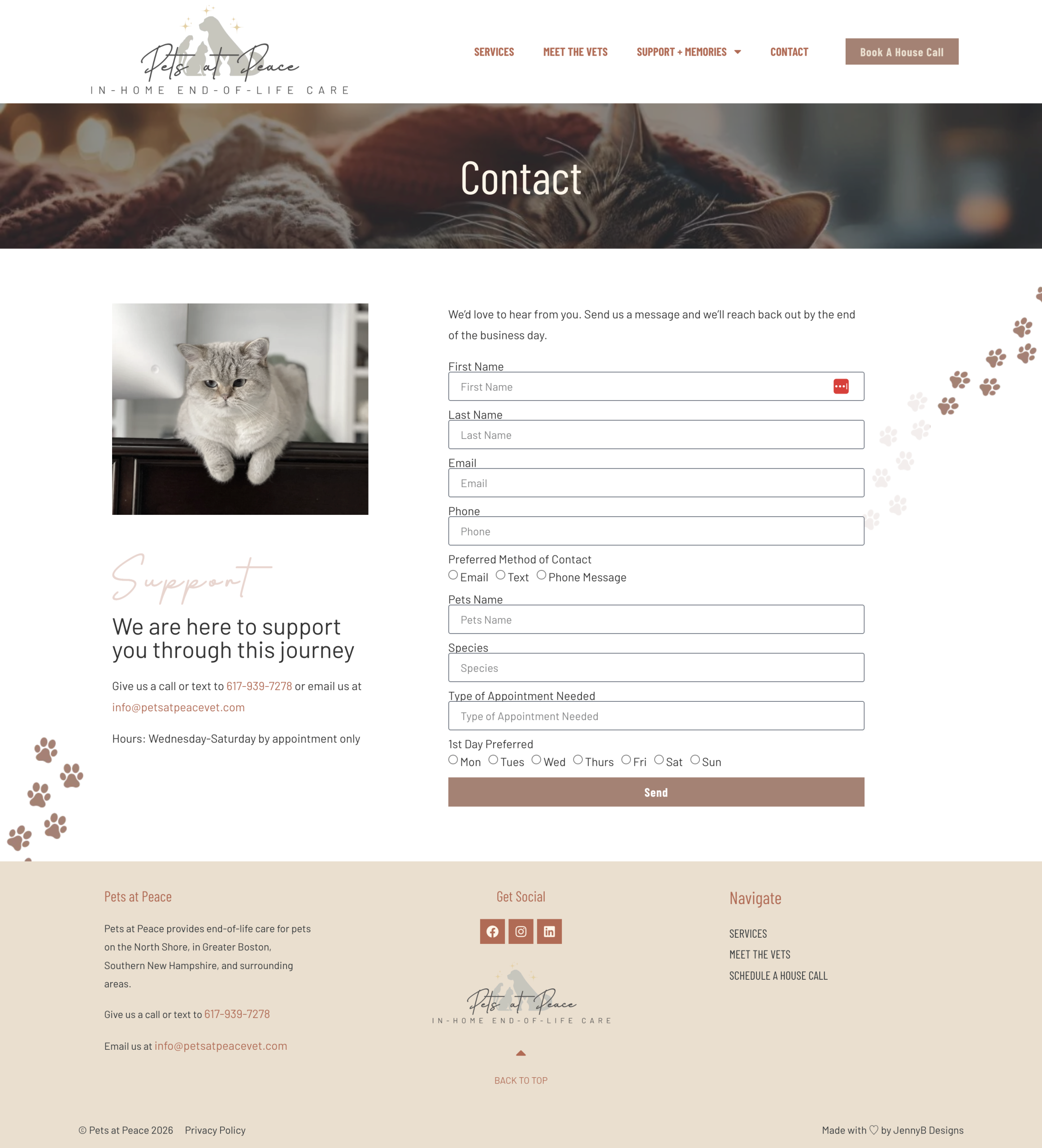
On Rachel’s website, we created multiple clear pathways depending on where someone was in their journey. If they needed immediate help, there was a prominent phone number. If they wanted to schedule a consultation to discuss whether it was the right time, there was a simple form for that. If they were ready to book a service, that pathway was clear too.
We also made sure every call-to-action was specific. Not “Contact Us” but “Schedule a Consultation” or “Book Your In-Home Visit.” Pet owners shouldn’t have to guess what happens when they fill out a form.
The booking process should match the emotional state of your visitor. For Rachel’s practice, we kept forms short and simple. Name, phone, email, and a brief message about what they needed. We didn’t ask for their pet’s entire medical history upfront. That can come later.
When talking to veterinary website design companies, ask them about conversion optimization. How do they reduce friction in the booking process? How do they test and improve form completion rates? A designer focused on results will have strong opinions about this.
Easy booking isn’t just about convenience. It’s about respecting your visitor’s emotional state and making it as simple as possible for them to get the help they need.
5. Trust-Building Testimonials Placed Strategically Throughout the Site
Every veterinary website design company will tell you to include testimonials. But most of them will stick a generic testimonials page in your navigation and call it done.
That’s not strategic. That’s checking a box.
Strategic testimonial placement means understanding the psychology of where decisions get made on your website. It means using specific, detailed testimonials that address real concerns. And it means making those testimonials feel authentic and believable.
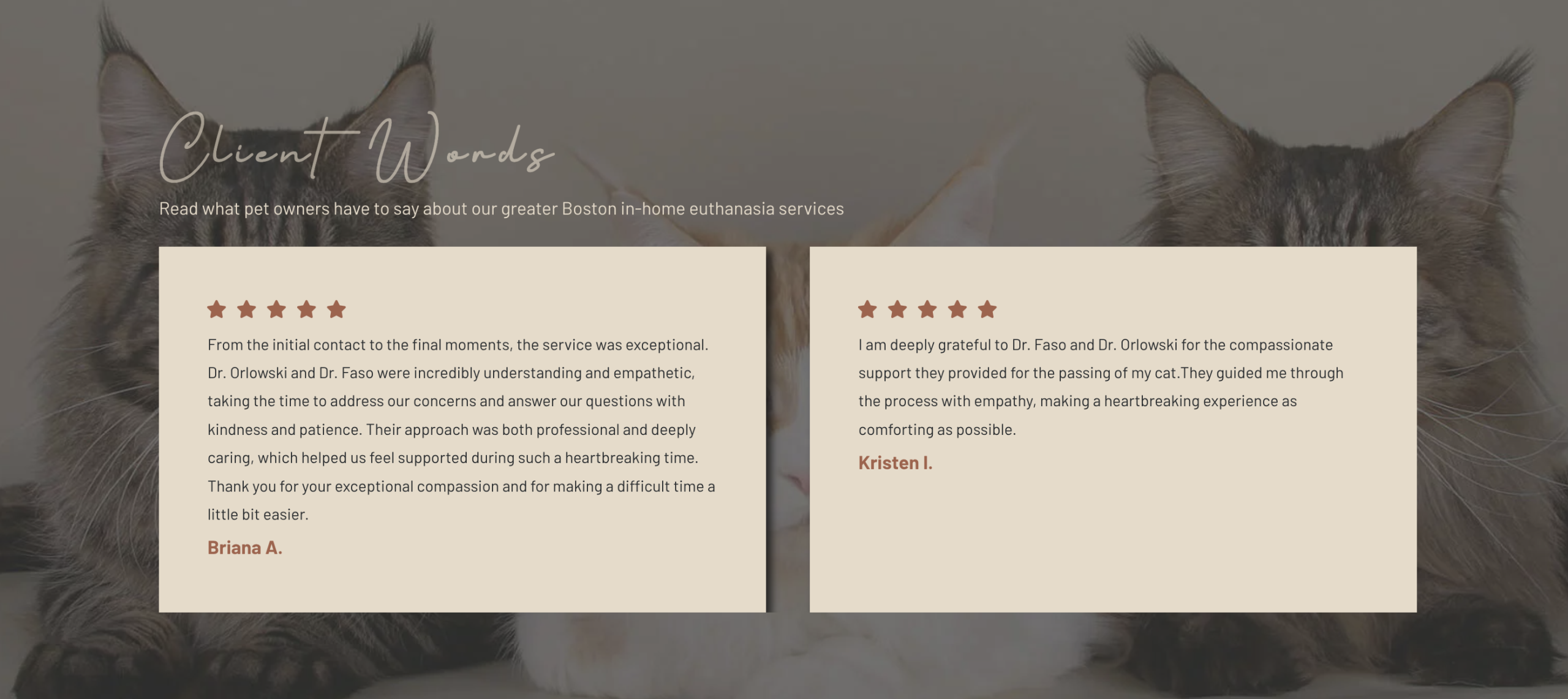
On Rachel’s website, we didn’t just collect generic “Dr. Rachel is great!” testimonials. We asked for specific stories. What was your situation before working with Pets at Peace? What made you choose Rachel? What was the experience like? What happened after?
These detailed testimonials do something powerful. They let potential clients see themselves in the story. A grieving pet owner reading about another family’s experience with in-home euthanasia can imagine what it would be like for their own family.
We also placed testimonials strategically. Near pricing information to reinforce value. On the services pages to build confidence in Rachel’s expertise. On the homepage to establish immediate credibility. Throughout the site wherever someone might have a question or concern.
And we made them feel real. We used full names when clients gave permission. We included photos when possible. We didn’t edit out the emotion or make them sound corporate.
When evaluating veterinary website design companies, ask to see examples of how they use testimonials. Do they just stick them all on one page? Or do they think strategically about placement, specificity, and authenticity?
The difference between testimonials that convert and testimonials that don’t comes down to how well they address the actual concerns and questions of your ideal client.
What Most Veterinary Website Design Companies Get Wrong
After working with Rachel and seeing her business triple in just two months, I can tell you exactly what most veterinary website design companies miss.
They focus on making websites that look good in their portfolio instead of websites that actually work for the practice owner.
They use generic templates and stock photos instead of creating something that reflects your unique approach and personality.
They don’t think about the emotional journey of pet owners landing on your site. Are they anxious? Grieving? Researching? Ready to book? Each of these emotional states requires different content and different calls-to-action.
They treat veterinary practices like any other service business instead of understanding the unique trust-building requirements of healthcare for beloved pets.
And they don’t measure results. A good designer should be able to show you how their work translates to more bookings, more consultations, and more clients.
How to Choose the Right Veterinary Website Design Company
If you’re in the market for a new website, here’s what to look for when evaluating veterinary website design companies.
Ask about their process. Do they have a clear timeline? Defined milestones? A structured approach to gathering your content and feedback? Rachel mentioned over and over how much she appreciated my organization and clear deadlines. That structure reduced her stress and kept the project moving forward.
Look at their portfolio, but look critically. Don’t just ask “Is this pretty?” Ask “Would this convert?” Do you see strategic placement of calls-to-action? Clear service explanations? Trust-building elements throughout?
Ask about their philosophy on key decisions. Should you show pricing? How should testimonials be displayed? What about appointment booking? A strategic designer will have informed opinions based on conversion data, not just aesthetic preferences.
Check if they understand your specific audience. Pet owners aren’t the same as general consumers. They’re making decisions about family members. They need education, reassurance, and emotional support through your website.
Ask about results. Can they show you case studies with actual business outcomes? Traffic increases are nice, but what you really care about is whether the website brings in more clients.
Rachel’s experience working with me wasn’t just about getting a beautiful website (though it is beautiful). It was about having a partner who understood the strategic elements that would actually grow her business.
Your Veterinary Practice Deserves More Than a Pretty Website
When Rachel first reached out to me, she’d already spent months trying to DIY her website. She had the vision. She had the content. She just couldn’t make it all come together in a way that felt right.
Two months after launching her new site, she had tripled her client base. But the transformation went beyond numbers.
She told me that having a website she was proud of changed how she showed up everywhere. She shared her business cards with confidence. She posted more consistently on social media because she had somewhere beautiful to send people. She even said it influenced how she presented herself at in-person client visits.
That’s what happens when you work with someone who understands that veterinary website design isn’t just about design. It’s about strategy, psychology, and conversion optimization.
If you’re ready to create a website that works as hard as you do, I’d love to chat. My four-week website design process takes all the stress out of launching a professional online presence, and you’ll get the organization, support, and strategic guidance that Rachel appreciated.
Book a discovery call and let’s talk about your vision for your practice.
And if you want to hear the full story of Rachel’s transformation, listen to the complete podcast episode where she shares exactly what the process was like and the results she’s seeing.
Don’t forget to sign up for my Website Design Made Simple newsletter where I share one actionable tip each week to help you make your website work harder for your business.
Your veterinary practice deserves more than a template website. Let’s build something that actually brings in clients.