A few weeks ago, my family and I took the train up to Jungfraujoch, the highest point in Europe you can reach that way. My husband had been planning the trip for six months, and we had three possible days to make the climb. We picked the third one on purpose, because up there, the view depends entirely on whether the sky is clear. Same mountain, same tickets, same amount spent either way, but a completely different experience depending on the visibility.
On day three, it was perfectly clear. You could see for miles.
Somewhere on the train ride back down, I started thinking about websites, and about why website strategy matters so much more right now than it used to. Not because good design has stopped mattering. Because clarity has become the one thing that separates a website that works from one that just looks finished.
Here is what I mean by that, and why I think it matters more now than it did even a year ago.
Clarity Is the Real Job of Your Website
When people think about what makes a good website, they usually think about how it looks. Is it modern? Is it pretty? Does it feel high end? Aesthetics do matter. A beautiful website builds trust and represents your brand. But looks are not the job of your website. Clarity is the job.
Think about the last time you landed on a website and left within a few seconds. It probably was not the colors. It was probably because you could not tell what the business did, who it was for, or what you were supposed to do next. It was foggy.
That confusion, even for half a second, is enough to lose someone. They leave and go find the next option, one that gives them a clear view right away. Every page, every section, every button should hand your visitor exactly what they need to see the moment they need to see it, without making them dig for it or scroll around looking.
Why AI Built Websites Look Finished but Still Feel Foggy
I have been noticing a lot of websites built with AI lately, and I have spent time testing this myself too. These sites technically look done. They are polished, professional looking, and put together fast. But most of them are foggy in a different way. A more polished looking way.
When you type a few prompts and ask a tool to generate a website, the homepage usually comes back with something broad and vague, something that could apply to almost any business in that industry. The structure and the customer journey end up identical from site to site. Same sections, same order, as if every visitor has the same questions no matter who they are, why they showed up, or what your business actually does.
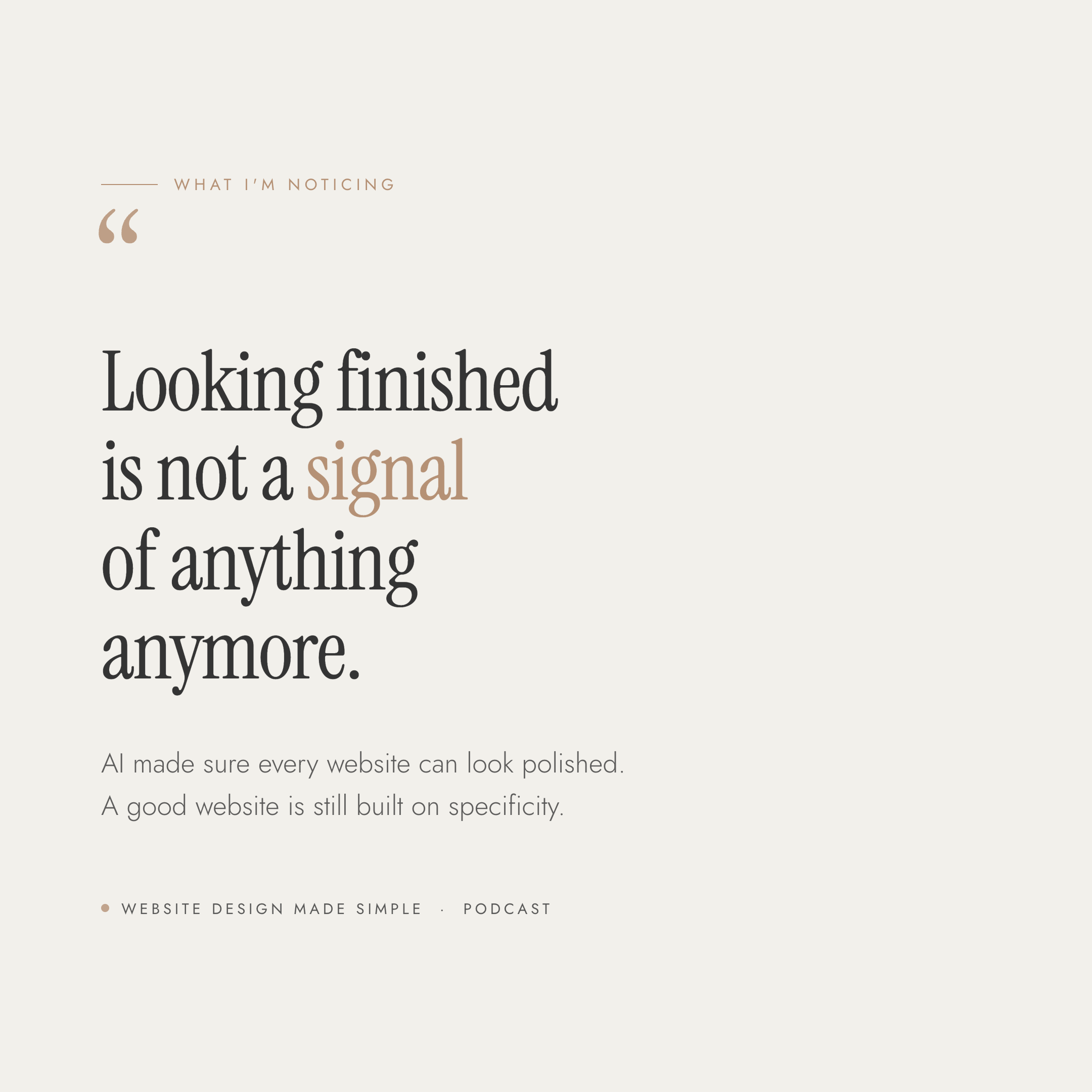
That is the opposite of what a website is supposed to be. A good site is built on specificity, and a tool generates from the average of everything it has seen before. It can hand you polish. It cannot hand you clarity.
This Is Why Website Strategy Matters More Now, Not Less
A few years ago, if you built a website yourself, it was easy to spot. A well designed site was a real signal that you had invested in a professional, and you could tell. That signal is mostly gone now. Anyone can generate something polished in an afternoon.
But the thing that will actually set your business apart is something a tool cannot generate for you. It is a clear view of your specific business for your specific customer. AI can write a paragraph that sounds professional. It cannot tell you which hesitation is stopping a decision for your particular client. It does not know that your ideal client always asks about timeline before price, or that they need to see proof before they will even read your process.
That is a structure and experience problem, and it requires understanding real people and real behavior, which a generic tool simply does not have. The businesses that will stand out from here forward are not the ones with the prettiest AI generated homepage. They are the ones who give their visitors a real clear view built around actual hesitations, not a guess dressed up to look its best. This is exactly why a website audit is worth doing even on a site that already looks good on the surface.
What Real Clarity Looks Like in Practice
This does not mean AI tools are the enemy. If you use them with strategy first, and you understand what you are asking for, they can genuinely help you move faster. The problem is not the tool. The problem is asking it for a finished product instead of asking it to execute a strategy you already understand.
Start with the actual questions your ideal client has, in the order they have them. Build your about page and your homepage around those questions instead of the questions every competitor’s site answers. Make sure your social proof speaks to the specific fear your client is trying to talk themselves out of. And make sure every call to action tells them exactly what happens next, because a confused visitor never becomes a client, no matter how nice the button looks.
If you are not sure whether your site is doing this right now, it is worth checking your homepage against a quick clarity check. Most business owners are too close to their own site to see the fog.
Bringing It Back to the Mountain
This whole episode came from standing at the top of Jungfraujoch on the one clear day out of three, thinking about how much of a difference visibility made to the exact same trip. Your website should work the same way for every single visitor, every single time. Not trying to impress anyone with polish, but built around real questions a real visitor has, so they never have to dig for the answer.
Strategy is what makes that possible, whether you are working with a designer or using AI tools to move faster. Looking finished is available to everyone now. Being clear is not, and that is exactly why it is worth getting right.
If you want help figuring out where your own site is still foggy, a website coaching call is a good place to start, or you can look at the full website design services I offer if you are ready for a rebuild. And if you just want to talk it through first, you can always reach out and book a discovery call. You can also catch the full conversation behind this post on the Website Design Made Simple podcast.