
Your veterinary website needs to do more than list your services and display a phone number. It needs to help pet owners quickly understand how you can help, feel confident in your expertise, and know exactly what to do next.
That becomes especially important when your practice provides specialized or emotionally sensitive care. Your visitors may be worried, overwhelmed, or trying to make a difficult decision. They need information, but they also need reassurance that they have found someone who understands what they are going through.
JennyB Designs creates custom websites for veterinary practices that want to communicate their value more clearly, build trust with pet owners, and turn more website visits into qualified inquiries.
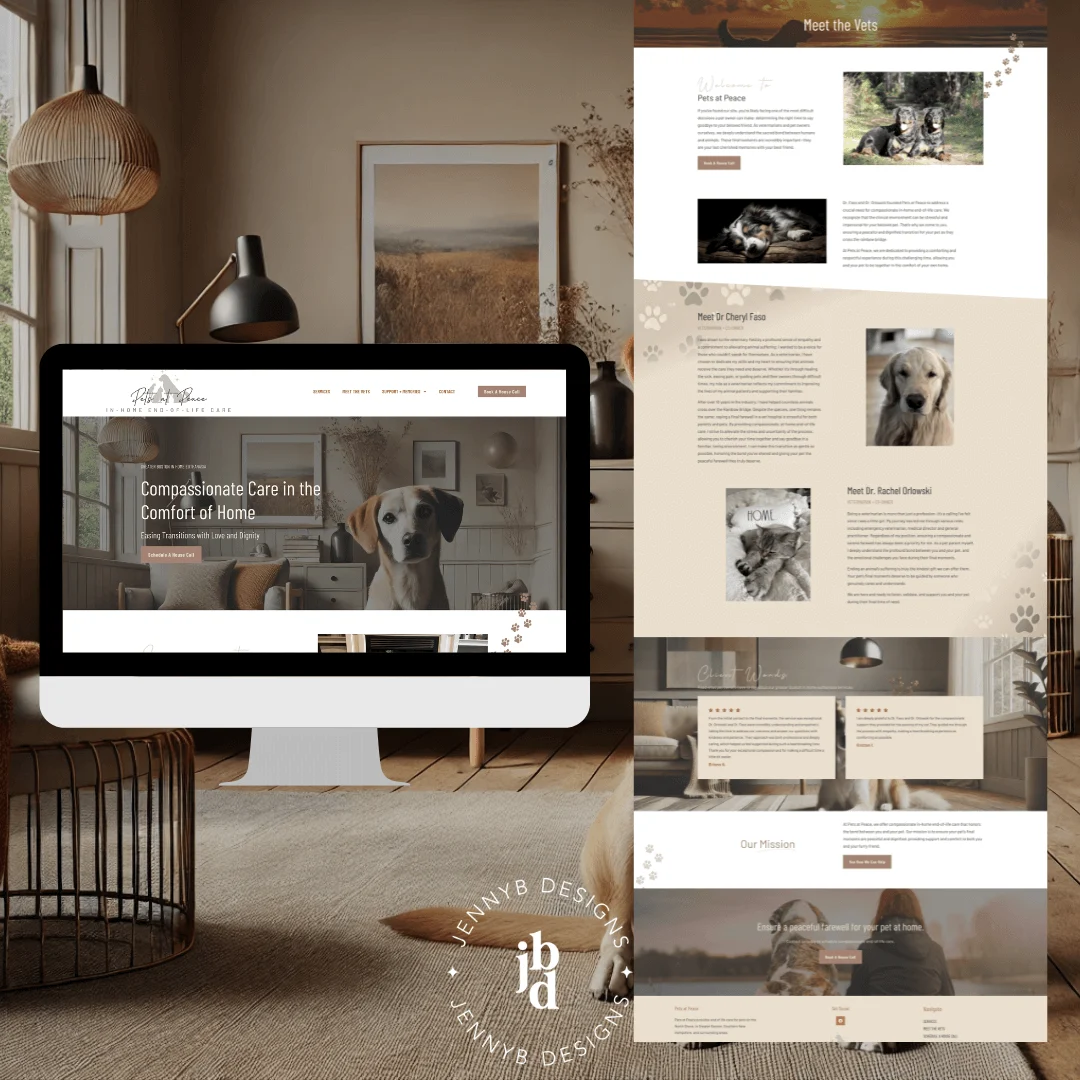
The Pets at Peace website is a powerful example of what can happen when thoughtful strategy, compassionate messaging, and clear website design work together. Want to see the finished website and hear what the client thought of the process? Explore the complete Pets at Peace veterinary website case study.
A Veterinary Website Is Part of the Client Experience
A veterinary website is often one of the first meaningful interactions a pet owner has with your practice.
Before they call, complete a form, or walk through your doors, they may be using your website to answer important questions:
- Does this practice provide the care my pet needs?
- Do they understand what my family is experiencing?
- What will the process look like?
- How much will it cost?
- Can I trust these people with my pet?
- What should I do next?
A beautiful website may create a positive first impression, but appearance alone cannot answer those questions. The structure, messaging, photography, service information, and calls to action all need to work together to help a visitor feel informed and supported.
That is why effective veterinary website design begins with the client journey, not a template.
The Pets at Peace Veterinary Website Project
When Rachel launched Pets at Peace, she had a clear vision for the experience she wanted to provide. Her practice offers compassionate, in-home end-of-life veterinary care for pets and their families.
This was not a service that could be communicated with generic veterinary copy or cheerful stock photos. Families often arrive at the website while facing one of the most emotional decisions they will make as pet owners.
Rachel needed a website that could hold the weight of that moment without making it feel heavier. It needed to communicate warmth and professionalism, explain what families could expect, and make it easy to reach out for help.
She had already tried using a template and customizing the website herself, but the result did not reflect the elevated, deeply personal experience she was creating for her clients. She knew the practice needed a more strategic and professional online presence.
That is where our work together began.
Designing Around the Pet Owner’s Emotional Journey
Before beginning the design, we considered the different reasons someone might arrive on the Pets at Peace website.
Some visitors would be looking for immediate help because their pet was actively declining. Others would be planning ahead, trying to understand their options before making a decision. Some would not know whether it was “the right time” and would need a compassionate professional to guide them.
Each visitor needed something slightly different, but all of them needed the website to feel calm, clear, and easy to navigate.
We built the website around the questions and concerns pet owners were likely carrying with them. Instead of making families search through vague service descriptions, the site explains the available support, what the process looks like, and how to begin the conversation.
This is one of the most important principles in veterinary website design: the website should be structured around what the visitor needs to understand, not simply around what the practice wants to say.
The Strategic Elements Behind the Website
Every major feature on the Pets at Peace website was included for a reason. The goal was not to add more pages or functionality for the sake of making the site appear impressive. The goal was to create a thoughtful experience that supported both the practice and the families it serves.
Clear Service Explanations
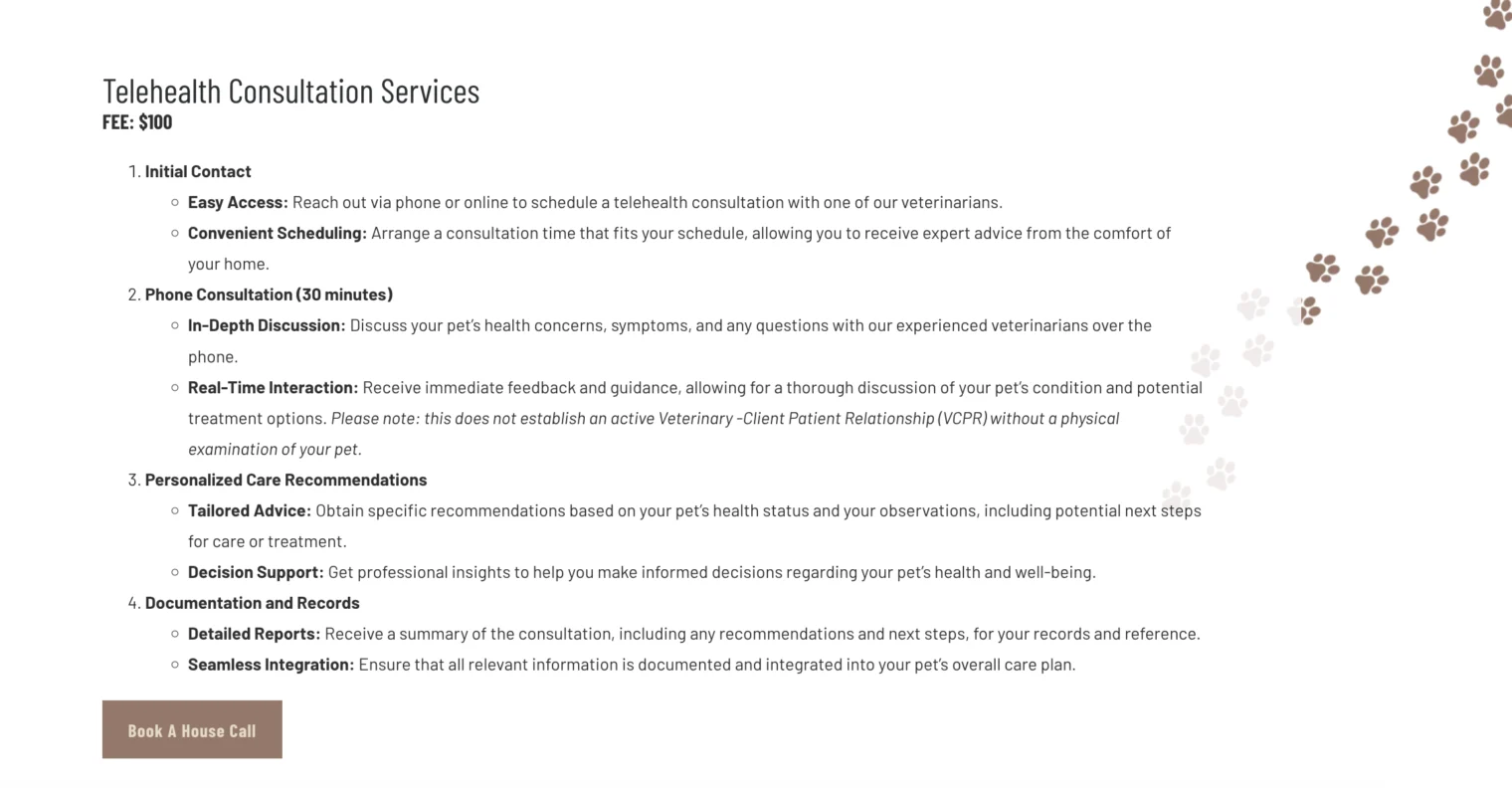
Pet owners need more than a list of procedures. They need to understand how a service works, what they should expect, and how it may help their pet or family.
The website explains the Pets at Peace experience in accessible, compassionate language. It answers important questions before a family reaches out, which helps reduce uncertainty and allows initial conversations to begin from a more informed place.
Clear service information also saves the practice time. When visitors arrive at a consultation with a basic understanding of the process, the veterinarian can focus on the family’s specific needs instead of repeatedly explaining the same foundational information.
Transparent Pricing
Rachel and I discussed whether pricing should appear on the website. Some businesses avoid publishing costs because they worry that the numbers will discourage potential clients.
For Pets at Peace, transparency was the more appropriate strategy.
Families researching end-of-life care are already carrying a great deal of uncertainty. Requiring them to schedule a call simply to understand the financial commitment creates another source of anxiety.
Displaying starting prices helps families make informed decisions and determine whether the services are a realistic fit before reaching out. It also helps prequalify inquiries, reduces the likelihood of an unexpected pricing conversation, and demonstrates respect for the visitor.
There is no universal rule that every veterinary practice must display pricing. The important thing is to make the decision strategically based on the service, audience, and client experience—not because a template or designer automatically says to hide it.
Multiple Paths to Reach Out
Not every visitor will be ready to take the same action.
Someone facing an immediate situation may want to call. Another person may want to schedule a consultation to discuss their pet’s quality of life. A visitor planning ahead may simply want to learn more before initiating a conversation.
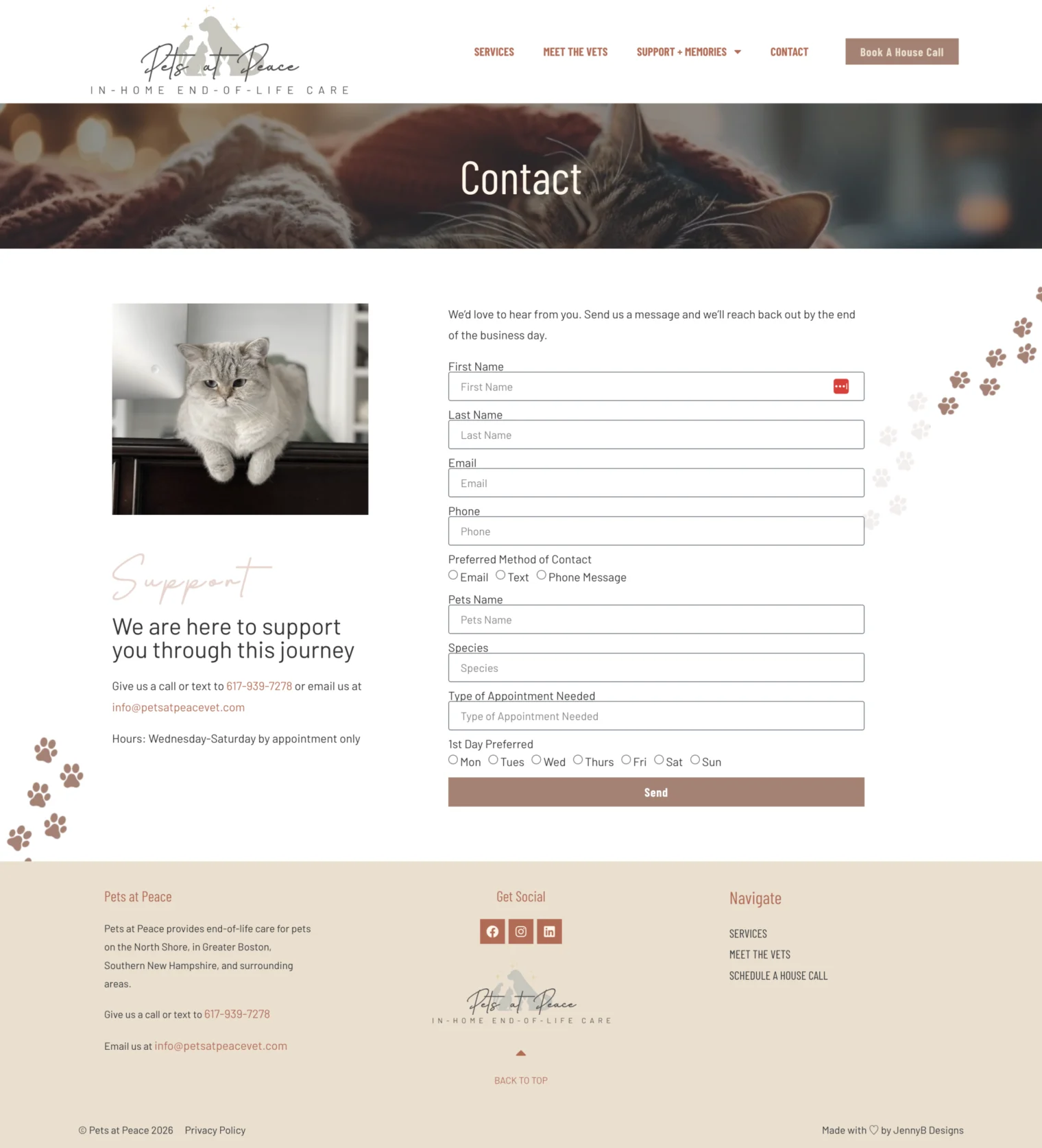
The website provides clear pathways for these different needs. Calls to action are specific, forms are intentionally simple, and visitors do not have to guess what will happen after they reach out.
This is particularly important for veterinary practices. Someone who is worried or grieving should not have to navigate a complicated form or hunt for a phone number.
A Memorial Feature That Extends the Relationship
One of the most meaningful elements of the Pets at Peace website is its memorial page. Families can submit a photograph and memory of a pet they have lost, creating a lasting tribute to that relationship.
The memorial page supports grieving families while also extending their connection with the practice beyond the appointment itself. It demonstrates the depth of care behind the business and helps new visitors see how Pets at Peace treats both pets and their people.
Rachel later created QR-code cards to include with sympathy notes. When families are ready, they can scan the code and go directly to the memorial submission page.
This is an excellent example of website functionality supporting a real-world client experience. The feature is not there simply because it looks impressive. It continues the care and compassion that define the practice.
Photography and Visual Warmth
The visual direction needed to feel peaceful and grounded without becoming sad or overly sentimental.
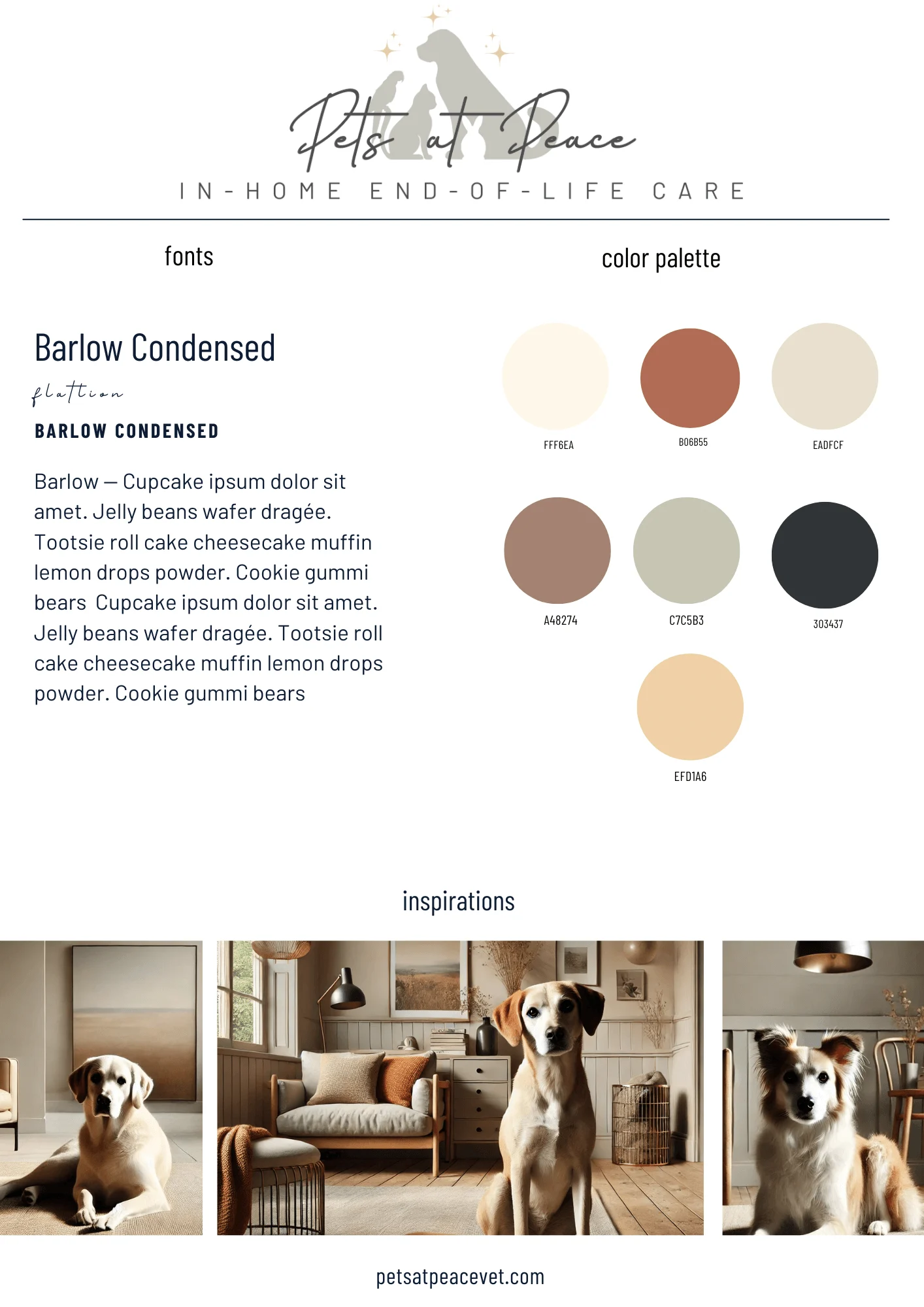
We used soft colors, thoughtful imagery, and gentle visual details to reflect Rachel’s approach to care. The design communicates professionalism, but it does not feel clinical or intimidating.
Veterinary websites often rely heavily on generic animal imagery. Relevant photos can certainly help create an emotional connection, but the full visual system should also reflect the personality and experience of the practice itself.
Your colors, typography, spacing, images, and page layouts all contribute to how a visitor feels before reading every word.
The Results: From Approximately 3 to 12 Clients per Month
The Pets at Peace website launched in October 2024. Rachel reported that the practice had been serving approximately three clients per month before the new website and related launch efforts.
Within two months, that number had grown to approximately twelve clients per month—a fourfold increase in monthly client volume.
It would be too simplistic to claim that changing a website automatically produces that kind of growth. Rachel also became more confident promoting the business, connected with local veterinarians, distributed new marketing materials, and showed up more consistently because she finally had a professional website she was proud to share.
The website became the foundation supporting those efforts.
It gave referral partners a credible place to send families. It helped potential clients understand the practice before contacting Rachel. It answered important questions, communicated the value of the service, and made the next step clear.
That is what a strategic website should do. It should support the marketing and relationship-building already happening in your business while making it easier for the right people to choose you.
“Jenny truly listened to our ideas and brought them to life in a way we could have only imagined. Her creativity and attention to detail exceeded all our expectations. The process was smooth, and she was incredibly responsive to our needs.” View the Pets at Peace Case Study
Rachel, Pets at Peace
The Website Changed More Than the Numbers
Rachel shared that the website helped elevate the experience she provides, not just online but throughout the business.
Having a professional website gave her more confidence when sharing business cards and introducing Pets at Peace to referral partners. It helped bring consistency to the brand and influenced the thoughtful details she incorporated into the client experience.
The website was no longer something she was apologizing for or trying to fix herself. It became a tool she could confidently use to grow the practice.
That transformation matters because business owners show up differently when their website reflects the quality of their work. They are more likely to promote the business, pursue opportunities, and send people to the site without hesitation.
What Veterinary Practices Can Learn From This Project
The Pets at Peace project involved a specialized end-of-life practice, but the strategic principles apply to many veterinary businesses.
Trust matters more than flashy features
Visitors need to understand who you are, how you can help, and why they should trust you. Clear services, relevant credentials, genuine testimonials, professional photography, and transparent information will usually do more than elaborate animation or trendy effects.
Your website should reflect the in-person experience
If your team is warm, attentive, and compassionate, the website should not feel cold or generic. The digital experience should prepare clients for what working with your practice will actually feel like.
Different visitors need different next steps
Not everyone is ready to schedule an appointment immediately. Some visitors need education, reassurance, or a lower-commitment way to connect before they are ready to act.
Specialized services require more explanation
End-of-life care, holistic medicine, rehabilitation, behavioral care, fear-free services, and other specialties may be unfamiliar to pet owners. Your website should explain how the service works and why someone might choose it.
A clear process improves the website project itself
Veterinary professionals already have demanding schedules. A website redesign should not become another open-ended project that constantly requires your attention.
At JennyB Designs, content is prepared before the build begins, the homepage establishes the design direction, and the complete website moves through a focused four-week design and launch process. You know what is needed from you, what is happening next, and when the website will launch.
What Your Veterinary Website Should Include
Every practice is different, but a strong veterinary website generally needs:
- A clear homepage that immediately explains the practice and who it serves
- Dedicated pages for important services or specialties
- Straightforward appointment or consultation pathways
- Information that answers common client questions
- Genuine photographs of the practice, team, or client experience
- Testimonials positioned near relevant decisions
- Clear location, service-area, and contact information
- Mobile-friendly layouts and forms
- Search-friendly page structure and content
- A plan for educational resources, updates, or frequently asked questions
- Calls to action that tell visitors exactly what to do next
The right structure depends on your practice, your audience, and what the website needs to help the business accomplish. A thoughtful discovery and strategy process should determine those decisions before the design begins.
Is Your Veterinary Website Supporting Your Practice?
Your website should help potential clients feel confident before they ever call your office. It should explain your services clearly, reflect the quality of care you provide, and make it easy for the right people to take the next step.
If your practice has grown but your website has not kept up, you do not necessarily need more features or pages. You need greater clarity about what visitors are looking for, what they need to believe, and how the website can support the way your practice operates today.
JennyB Designs creates strategic, custom websites for established service-based businesses and professional practices that have outgrown their current online presence. Every project combines thoughtful strategy, custom design, clear communication, and a focused launch process. Explore Website Design
If you are currently comparing designers, read How to Choose a Veterinary Website Design Company for the questions, process details, and warning signs worth reviewing before you hire.
Ready for a Veterinary Website That Reflects the Care You Provide?
If your current website feels outdated, generic, difficult to navigate, or disconnected from the experience your practice provides, let’s talk about what it needs to do better.
The discovery call is a chance to discuss your practice, your current website, and what you would like a new site to accomplish. There is no pressure to make a decision on the call—just a useful conversation about whether JennyB Designs is the right fit for your project.
Related episodes and articles
How to Choose a Veterinary Website Design Company
This was first published as its own article.
When you start researching veterinary website design companies, you will find plenty of polished portfolios. Modern layouts, professional photography, and attractive color palettes are easy to spot. What is harder to determine is whether the person behind those designs understands how a veterinary website needs to support your practice and the people you serve.
A veterinary website is not only a digital brochure. It may need to reassure an anxious pet owner, explain an unfamiliar treatment, help someone make an emotional decision, or make it easy to request an appointment without adding more stress to the experience.
That requires more than a designer with good taste. It requires someone who can think strategically about your services, your clients’ emotional state, the questions they need answered, and what will help them feel confident taking the next step.
If you are comparing veterinary website design companies, here are the factors I would pay attention to before choosing one.
1. Look for Strategy Before Design
A good veterinary website project should not begin with a template, a color palette, or a conversation about which competitor sites you like. It should begin with your practice.
The designer should want to understand:
- The services and specialties you most want to grow
- The types of pet owners you want to reach
- How people currently find and choose your practice
- The questions clients ask before scheduling
- The points where prospective clients hesitate or become confused
- What makes your approach different from other local options
- What you want the website to help your business accomplish
These answers should shape the navigation, page structure, messaging, calls to action, and visual design. Otherwise, you may end up with an attractive website that still leaves visitors unsure whether your practice is right for them.
Ask each designer how strategy influences their work. If the answer focuses only on colors, fonts, and visual inspiration, keep asking questions.
2. Make Sure They Understand the Veterinary Client Journey
Pet owners do not all arrive on a veterinary website feeling the same way. Someone scheduling an annual wellness visit has different needs from a family researching a serious diagnosis, specialized treatment, or end-of-life care.
A strategic designer should consider what each visitor may be feeling and what they need to understand before taking action. That may include reassurance, educational information, pricing context, an explanation of the appointment process, or the ability to speak with someone before committing to a service.
This was especially important when I designed the website for Pets at Peace, an in-home end-of-life veterinary practice. Its visitors are often worried, grieving, or unsure whether it is time to make a difficult decision. The website needed to feel calm and compassionate while still providing clear information and a straightforward path to request help.
You can read the Pets at Peace veterinary website case study to see the visual project and the client experience behind it.
3. Review How They Explain Veterinary Services
A services page should do more than name the services your practice provides. It should help pet owners understand what those services mean, who they are for, how the process works, and why someone might choose your approach.
This is particularly important for specialties that may be unfamiliar or emotionally complicated, including:
- In-home end-of-life care
- Fear-free or low-stress veterinary care
- Behavioral medicine
- Rehabilitation and mobility support
- Holistic or integrative treatment
- Specialty surgery or chronic-disease management
- Emergency and urgent veterinary services
A designer does not need to be a veterinarian, but they should know how to draw the right information out of you and organize it around the client’s questions.
When comparing companies, ask to see examples of service pages—not only homepages. Look for clear explanations, meaningful headings, relevant calls to action, and information that helps a visitor make a decision.
4. Ask How They Approach Pricing Transparency
There is no universal rule that every veterinary practice should display pricing. The right decision depends on the service, the client journey, and how your practice handles consultations and estimates.
What matters is that your designer helps you make the decision strategically instead of automatically telling you to hide or display every price.
For Pets at Peace, showing starting prices helped families understand the financial commitment before reaching out. In an already emotional situation, that transparency removed one source of uncertainty and helped inquiries begin with clearer expectations.
Pricing information can also prequalify potential clients, reduce uncomfortable surprises, and demonstrate respect for someone’s need to make an informed choice.
Ask a potential designer how they evaluate pricing decisions and how they would present costs, ranges, consultation fees, or insurance information in a way that supports both the practice and the client.
5. Evaluate the Appointment and Inquiry Experience
A beautiful veterinary website can still lose potential clients if the next step is confusing.
Visitors should be able to quickly determine whether they need to call, request an appointment, schedule a consultation, complete a form, or seek emergency care somewhere else. The language on each button should make the next step clear.
The forms themselves should also match the situation. Someone seeking routine care may be comfortable completing a longer intake form. Someone facing an urgent or emotional decision may need a much simpler way to begin the conversation.
When reviewing a designer’s work, look beyond the visual presentation and test the journey:
- Can you find the phone number quickly on a mobile device?
- Are appointment buttons easy to recognize?
- Does the wording explain what happens next?
- Are forms asking only for information needed at that stage?
- Are urgent-care instructions easy to find?
- Does every important page give the visitor a logical next step?
Ask the designer how they reduce friction and decide where calls to action should appear. Their answer should demonstrate more thought than simply placing a generic “Contact Us” button in the header.
6. Look for Thoughtful Trust Signals
Trust is central to every veterinary website. Pet owners are choosing someone to care for a member of their family, and they are paying attention to more than credentials.
A strong website may use several forms of proof:
- Specific client testimonials
- Veterinarian and team biographies
- Professional credentials and affiliations
- Photographs of the real practice and team
- Clear explanations of the care philosophy
- Useful educational resources
- Community partnerships and referral relationships
- Relevant case studies or client experiences
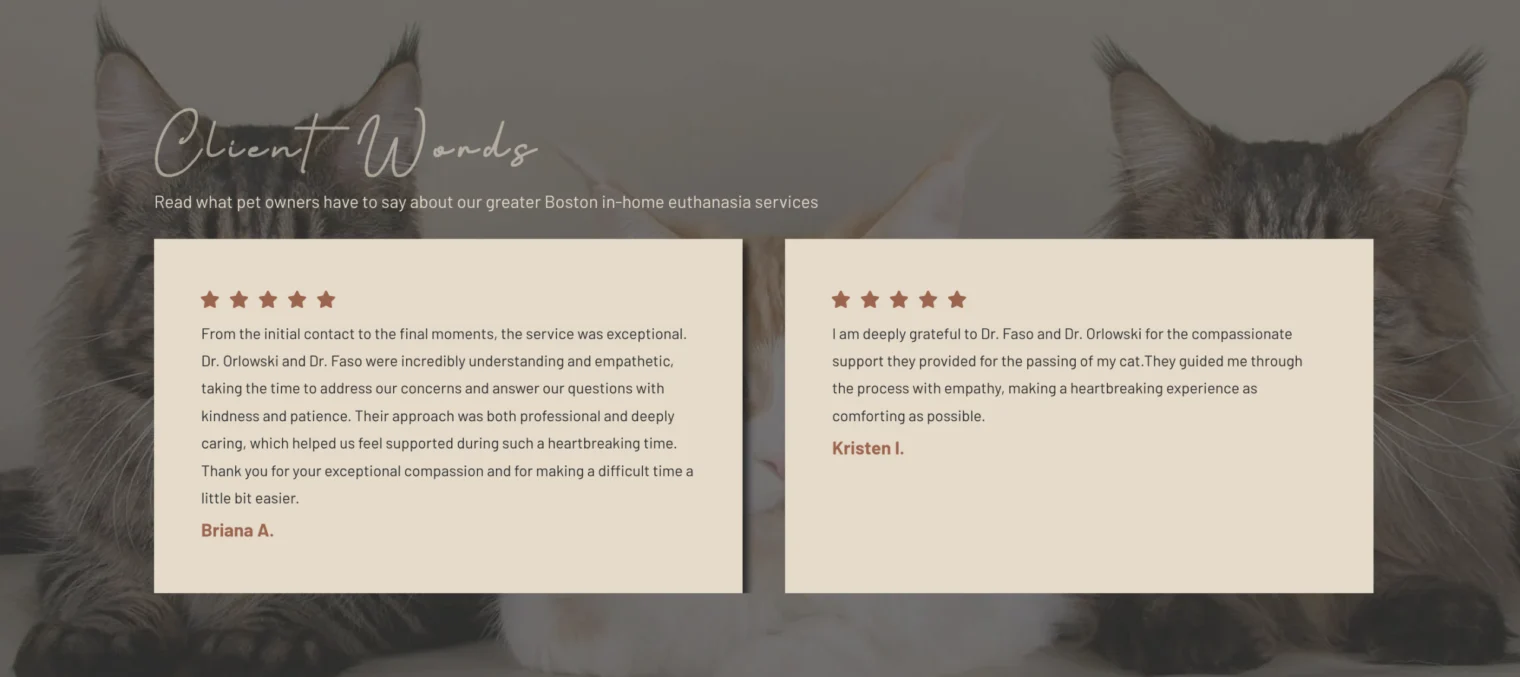
Testimonials are most useful when they appear close to the decision they support. A review about compassionate treatment may belong on a relevant service page. A testimonial mentioning clear communication could reinforce the appointment process. A review describing an excellent overall experience may work well on the homepage.
Ask potential designers how they choose and place social proof. A single page containing dozens of disconnected reviews is not always as persuasive as a few detailed testimonials placed at meaningful points throughout the website.
7. Ask Whether the Website Can Support the Client Relationship
The most useful website features are not always the most complicated. Sometimes one thoughtful addition can extend the experience your practice provides.
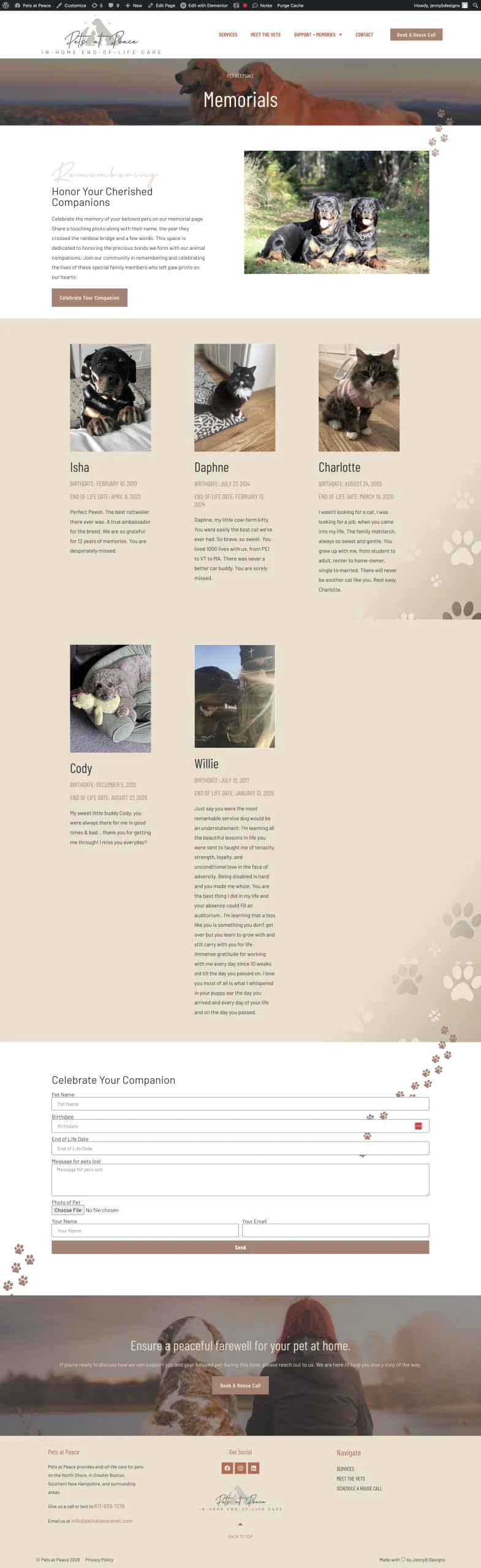
For Pets at Peace, we created a memorial area where families could submit a photograph and memory of a pet they had lost. Rachel later created QR-code cards to include with sympathy notes, allowing families to visit the submission page when they felt ready.
The memorial feature supports grieving families, keeps them connected to the practice, and gives new visitors a meaningful look at the care behind the business. It works because it is relevant to the service and the people receiving it—not because every veterinary website needs the same feature.
Ask the designers you are considering how the website might support clients before and after an appointment. The answer may involve educational resources, preparation instructions, follow-up materials, memorials, downloadable guides, or another feature specific to your practice.
8. Understand the Website Design Process
Before hiring a designer, you should know how the project will move from initial strategy to launch.
Ask about:
- How the designer gathers information about your practice
- What content and photographs you must provide
- Whether copywriting, branding, or SEO support is available
- When you will first see the design
- How feedback and revisions are handled
- Who is responsible for technical setup and integrations
- How the website will be tested before launch
- Whether training and post-launch support are included
- Who owns the domain, hosting account, website files, and content
- When the website is expected to launch
A defined process protects both the practice and the designer. It reduces confusion, prevents the project from becoming open-ended, and makes it easier for a busy veterinary professional to plan their time.
At JennyB Designs, clients prepare their content before the build begins. The homepage establishes the visual and strategic direction, and the remaining pages are completed through a focused four-week design and launch process. Clear feedback points and a guaranteed launch date keep the project moving.
You can learn more about my custom website design process and what is included.
9. Look for Relevant Results Without Expecting Guarantees
Business results matter, but website performance should be discussed honestly. A designer cannot guarantee a certain number of appointments or claim that a website alone created every new client.
The strongest examples show how a website supported a larger business and marketing effort.
After the Pets at Peace website launched, Rachel reported that the practice grew from approximately three clients per month to twelve clients per month within two months—a fourfold increase in monthly client volume.
The website helped support that growth by giving referral partners a credible place to send families, answering common questions, presenting pricing clearly, and making it easier to request help. Rachel also promoted the practice, connected with local veterinarians, distributed marketing materials, and shared the business more confidently because she finally had a professional online presence.
For a detailed look at the project strategy and results, read Veterinary Website Design That Builds Trust and Brings In More Clients.
Questions to Ask Veterinary Website Design Companies
Before signing a contract, ask each company:
- How will you learn about our practice, clients, and goals?
- Will our website be custom designed or built from a pre-made template?
- How do you plan a website around the visitor journey?
- What do you need from us before the project begins?
- Do you provide guidance for copy, photography, and SEO?
- How do you approach appointment requests and calls to action?
- How many revision rounds are included?
- What is the expected project timeline and launch date?
- Will the website work well on phones and tablets?
- Who owns the finished website and related accounts?
- Will we receive training after launch?
- What support is available once the website is live?
The answers should help you understand not only what the finished website may look like, but also what working with the designer will feel like.
Potential Warning Signs
No single answer automatically makes a website company the wrong fit, but pause if:
- The conversation focuses entirely on appearance and never addresses business goals
- The company cannot clearly explain its process or timeline
- You are expected to fit your content into a template chosen before discovery
- The designer cannot explain why a page, feature, or call to action is being recommended
- There is no clear plan for mobile usability, accessibility, testing, or launch
- Ownership of the website, hosting, domain, or content is unclear
- The company promises guaranteed rankings, traffic, or appointment numbers
- You do not feel listened to during the initial conversation
The right designer should bring expertise and recommendations while still making room for your knowledge of your practice and clients.
Choose a Veterinary Website Partner, Not Just a Portfolio
A strong portfolio matters, but it should be the beginning of your evaluation rather than the end.
The right veterinary website design company should understand what your visitors need, help you make strategic decisions, communicate clearly, and keep the project moving toward a defined launch date. The finished website should look professional, but it should also explain your services, build trust, and guide pet owners toward an appropriate next step.
If your practice has outgrown its current website, JennyB Designs offers custom website strategy, design, and development through a calm, organized process. We will look at what your current site is communicating, what your visitors need, and what the new website must do better.