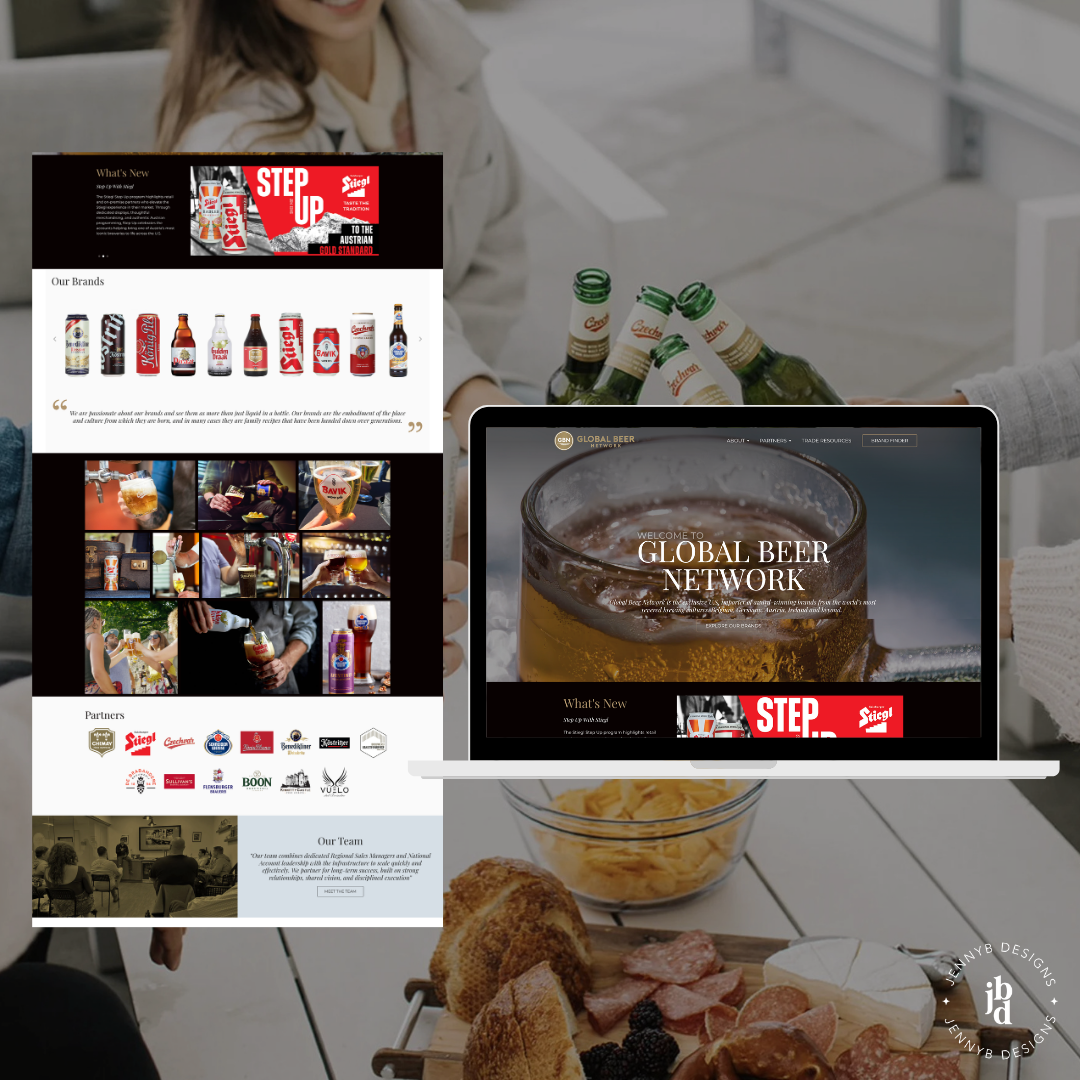
When Glenn and Pete came to me, they had a website. What they did not have was a website that actually reflected their business.
Global Beer Network is the exclusive U.S. importer of award-winning beer brands from Europe’s most respected brewing cultures — Belgium, Germany, Austria, Ireland, and beyond. Their portfolio includes iconic names like Chimay, Stiegl, Schneider Weisse, and Czechvar. This is a premium, well-established business with serious credibility in the U.S. trade market. Their website, though? It was not telling that story.
That gap between where a business is and where its website is, that is one of the most common things I see in my website design services. And it is almost always fixable.
The Problem Was More Than Aesthetics
The original Global Beer Network site had two things working against it. First, it did not look or feel like a premium importer. The design was not reflecting the exclusivity and credibility of the brand. For a company that represents some of the most heritage-rich breweries in Europe, that disconnect matters. Your distributors, buyers, and trade partners are making decisions about you based on what your site communicates before a single conversation happens.
Second, it was hard to use on the backend. Glenn and Pete wanted to be able to manage their own content. With a portfolio as dynamic as theirs, new brands joining, programs launching, brewery profiles to maintain, they needed a site they could actually get into and update without calling a developer every time.
When both of those things are true at once, it creates real friction. You have a business that has grown and evolved, but a website that is frozen in an earlier version of who you were. That is a hard position to be in, especially in a competitive industry where first impressions carry real weight.
There Was Also a Bigger Complication
Here is the thing that made this project a little different from the start. Glenn and Pete had already tried to get this done. They had worked with another designer, and that project had stalled. Months had passed. The site was not finished, and they were no further along than when they started.
By the time they came to me, they were understandably a little worn down. They had invested time, energy, and trust into a process that had not delivered. I have seen this before, and I understand what it does to a client. It makes you cautious. It makes you wonder if getting this done is even possible.
This is where having a clear, structured process matters more than almost anything else I bring to a project. When I work with a client, they know exactly what is happening, when it is happening, and what they need to do at each step. I build that into the timeline from day one. Things are delivered when I say they will be delivered. There are no surprises, no long silences, no wondering what is going on. That predictability is something I talk about on my about page because it is genuinely central to how I work, and for Glenn and Pete, it was exactly what they needed after their previous experience.
Within about a month, we had a finished product.
Understanding What a Beer Importer Actually Needs Online
Before I get into what we built, it is worth stepping back and talking about what this type of business actually needs from a website.
Global Beer Network serves a trade audience, distributors, buyers, on-premise accounts, and retail partners. These are not casual browsers. They come to the site with specific questions: Who is in the portfolio? What support is available? Who do I talk to? The site needs to answer those questions quickly and clearly, while also communicating the credibility and heritage that makes GBN worth working with.
At the same time, the portfolio itself is a living thing. New brands come on. Programs launch. Brewery profiles need to be updated. That means the backend has to be as functional as the frontend is polished. A site that looks great but cannot be managed efficiently is just a different version of the same problem.
I have done a lot of work with businesses that have layered audiences and complex content needs. My background working with nonprofits, organizations that often serve multiple audiences and need to communicate clearly to all of them, gave me a really strong foundation for thinking through this kind of information architecture. That thinking shaped how we approached the Global Beer Network project from the very beginning.
The Strategy and What We Built
We started with navigation because navigation is where clarity either happens or it does not.
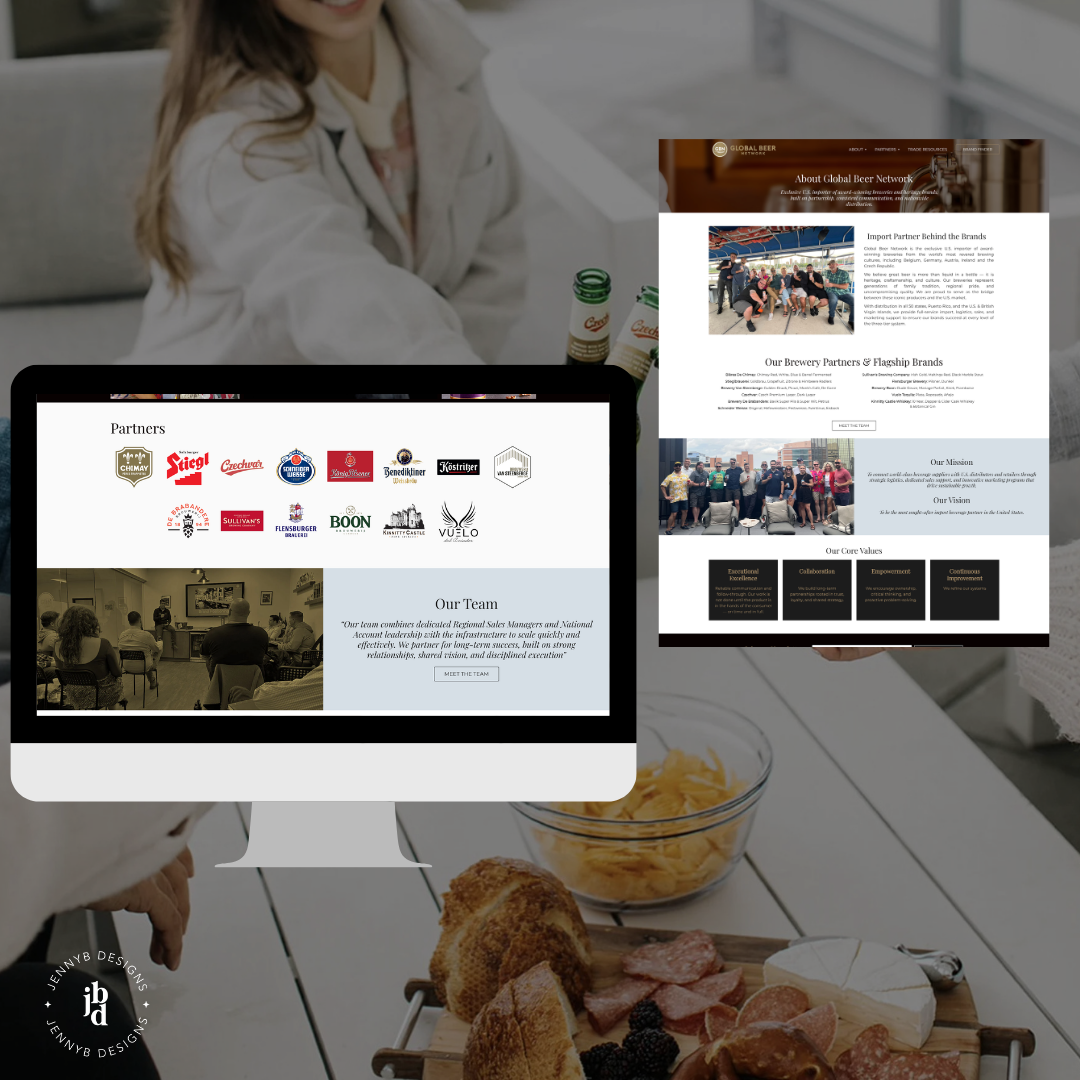
The original site did not make it easy for a trade visitor to find what they needed quickly. We rebuilt that entirely with a menu that organized the content in a way that actually made sense for the business. The About section became a clear path to Our Story and Leadership and Team. The Partners section organized the brewery portfolio in a scannable, logical way. Trade Resources got its own dedicated spot in the nav so partners could find what they needed without hunting.
From there, we brought the brand to life visually. We worked in Global Beer Network’s brand fonts and colors to create a look and feel that finally matched the premium, heritage-driven nature of the business. The gold tones, the typography, the overall palette, it all started working together in a way that communicated the exclusivity Glenn and Pete had built into their brand.
We also built the site with mobile in mind. Trade partners are not always sitting at a desk when they need to pull up a brand profile or check on a program. The mobile experience needed to work, and work well.
On the backend, we built everything in WordPress with Elementor so that Glenn and Pete could actually manage their own content. The brewery archive, the brand portfolio, the What’s New section, all of it was structured so they could go in, make updates, and add content without needing to call anyone.
What the Site Looks Like Now
The Global Beer Network site now opens with a strong, clear hero that immediately communicates what the business is, the exclusive U.S. importer of award-winning brands from the world’s most revered brewing cultures. The brand logos, the product photography, the overall visual weight of the site, it all reads premium.
The What’s New section keeps the homepage fresh and gives trade partners a reason to come back. The Chimay Service Program, the Stiegl Step Up initiative, and the addition of Czechvar to the portfolio are all featured there, making it easy for visitors to see that this is an active, growing business with real support behind its brands.
The brand portfolio is organized and browsable. Individual brewery pages give each brand the depth and storytelling it deserves. The trade resources are findable. The contact path is clear.
And perhaps most importantly, the site is manageable. Glenn and Pete can log in and run it themselves. That was the point.
Key Takeaways for Business Owners in a Similar Situation
If you are reading this and your website is behind where your business actually is, here is what I want you to take from this story.
Your website is not just a placeholder. It is doing work on your behalf, or it is not. For Global Beer Network, the old site was not telling the right story to the right people. That has real consequences when your audience is trade partners making decisions about which brands to bring into their markets.
A previous bad experience with a designer does not mean the project cannot be done. It often just means the right process was not in place. When you work with someone who has a clear, structured timeline, where you know what is being delivered and when, the experience feels completely different. I have seen clients come to me after months of stalled projects, and we turn things around in a matter of weeks. That is not magic. It is process.
You do not have to hand everything over. Part of the reason this project came together so smoothly is that we were clear from the beginning about what I was delivering and what Glenn and Pete wanted to handle themselves. That clarity is built into my website design services from day one. Scope, timeline, responsibilities, all of it is defined before we start.
And finally, a website that is easy to manage is not a bonus. It is a requirement. If you cannot get into your own site and make basic updates, you do not really own your online home. Building for manageability is something I think about on every project.
If you have a website that is not reflecting where your business is today, I would love to hear about it. You can schedule a discovery call and we can talk through what is not working and what a path forward might look like.
And if you want one practical tip each week to help you make your website work harder for your business, the Website Design Made Simple newsletter is a good place to start.