Your estate planning website needs to do more than list your legal services. It needs to make a sensitive, sometimes intimidating subject feel easier to understand while giving potential clients confidence that they have found the right attorney.
We create custom estate planning websites for solo attorneys and small law firms that want to build trust, communicate their value clearly, and guide more qualified visitors toward scheduling a consultation.
Modern Legacy Law Group is a perfect example. When Kerri and Erin reached out, they knew their DIY website wasn’t reflecting the heart of their business. As estate planning attorneys who serve families of all types with warmth and openness, they needed a website that captured their welcoming approach to a topic that can often feel overwhelming.
What Estate Planning Website Design Actually Needs to Do
Estate planning sits at an unusual intersection. The people visiting these sites are often making decisions during some of the most emotionally loaded moments of their lives. They are thinking about aging parents, young children, blended families, or their own legacy. Good estate planning website design has to hold all of that without making the topic feel heavier than it already is.
That means the design work goes well beyond looking polished. It is about creating a quiet kind of confidence in the visitor before they ever pick up the phone. The color palette, the photography, the words on the homepage, the way services are laid out, all of it sends a signal about whether this firm is one a family can trust with something this personal.
I have worked with service-based small businesses long enough to know that the firms doing the most meaningful work are often the ones whose websites are working hardest against them. Not because anything is technically broken, but because the site was built when they were just getting started, and the business has grown into something the original estate planning website design was never built to carry.
That is exactly where Kerri and Erin were when they reached out.
The Design Challenge
Modern Legacy Law Group had outgrown their original website, and Kerri and Erin knew it. The site had served its purpose when they first launched, but it was no longer doing justice to the firm they had built. Their practice is rooted in warmth and accessibility. They work with families of all kinds, approach estate planning without the formality that often surrounds legal services, and bring a level of genuine care that sets them apart.
None of that was coming through online.
When I looked at their original site, I could see the care that had gone into it. But it was reading as generic where it needed to read as specific, and formal where it needed to feel approachable. For a firm whose whole identity is built on making people feel comfortable talking about something uncomfortable, that gap was quietly costing them.
Here is the thing about estate planning website design specifically. Most people do not go looking for an estate planning attorney when everything is fine. They arrive on your site in a moment of transition. A new baby. A parent’s diagnosis. A relationship that changed. That first impression on your homepage is doing real emotional work, whether the site is designed for it or not.
Kerri and Erin needed an estate planning website design that could meet those visitors where they were, build trust quickly, and make it easy to take the next step without any of it feeling clinical or cold. That shaped every decision we made from there.
The Strategy
Before I touch any design, I spend time understanding how a business actually works. With Kerri and Erin, that meant getting clear on who their clients are, how those clients find them, what questions they are asking before they reach out, and what would make someone choose Modern Legacy Law Group over another firm in their area.
What came through clearly was that their warmth was their differentiator. Most estate planning website design defaults to projecting authority. Kerri and Erin had built something different, a practice where the conversation feels human from the very first call. The website needed to lead with that.
I mapped out a homepage structure designed around the visitor’s emotional state rather than the firm’s list of services. Most small business websites are organized around what the business offers. The sites that actually convert are organized around what the visitor is feeling and what they need to believe before they will take action.
For an estate planning firm, that meant the homepage needed to answer a few quiet questions a new visitor carries in with them. Is this firm for someone like me? Will they understand my situation? Is this going to feel overwhelming, or will I actually be supported through this?
Every structural decision, from the hero section to the service layout to the placement of their photographs, was made to answer those questions as quickly and gently as possible. I work through projects the way I do most things, as a list of smaller problems to solve in the right order rather than one big task to tackle all at once. That methodical approach tends to produce sites that feel calm to use, because they were calm to build.
We also made sure there were multiple pathways for engagement. Not everyone who lands on an estate planning law firm’s website is ready to book a consultation. Some visitors are still gathering information, getting a sense of who they might want to work with someday. The site needed to serve those visitors too, without letting them leave with nothing to hold onto.
What a Well-Designed Estate Planning Website Actually Includes
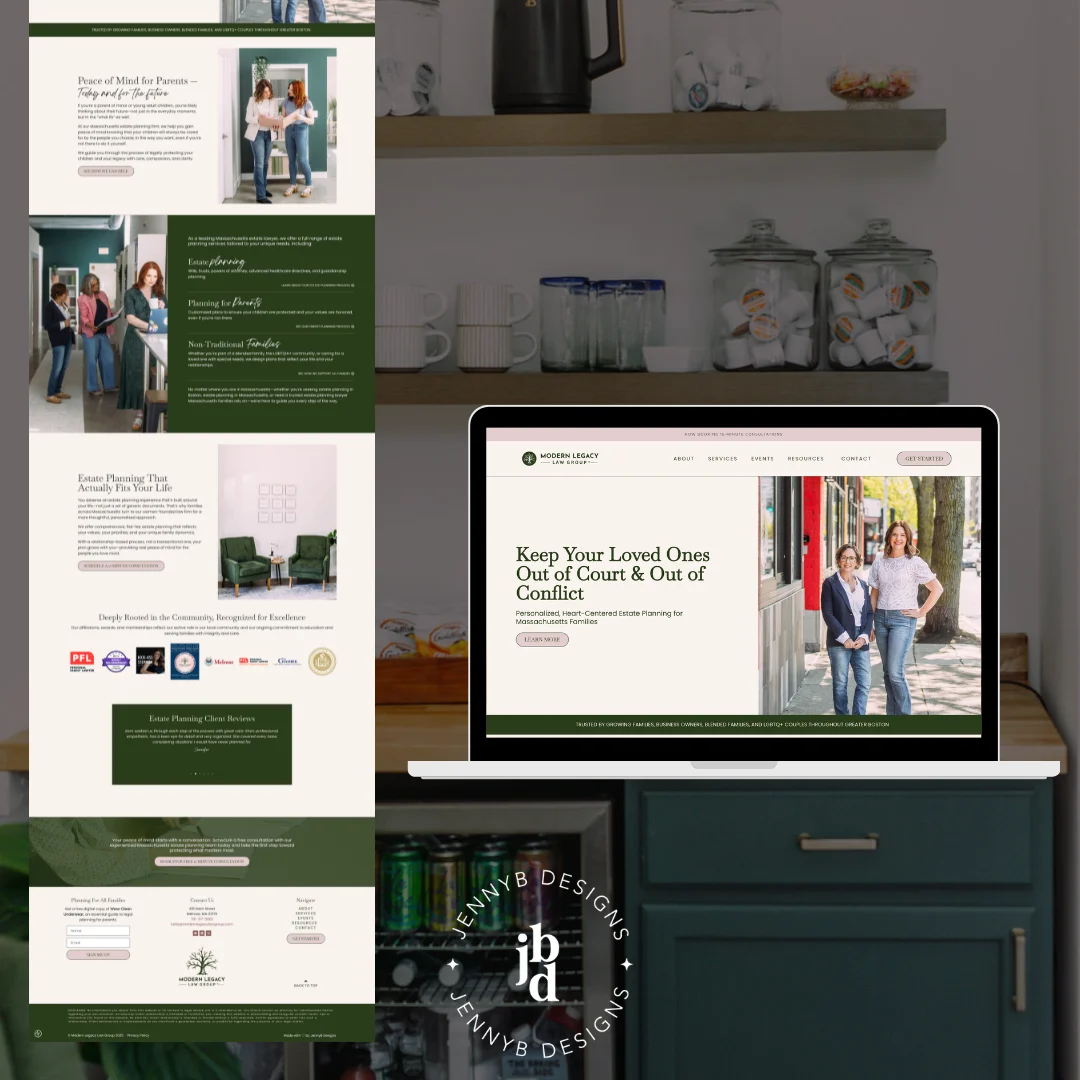
We designed their new estate planning website with a clear customer journey in mind. From the moment visitors land on the homepage, every element works together to build trust and guide them toward taking action.
Homepage Hero Section
The homepage immediately communicates who they serve and how they help, with a clear value proposition that speaks to families of all types. The hero section features one of their beautiful new professional photos alongside messaging that positions them as approachable experts.
Trust-Building Throughout
We strategically placed social proof and credentials throughout the site to build credibility without feeling stuffy. Kerri and Erin’s clients are often navigating grief or family complexity. We chose soft, grounded tones that would feel steady without being somber, because when someone arrives on this site in a hard moment, the design itself should feel like a quiet exhale.
Clear Navigation & User Experience
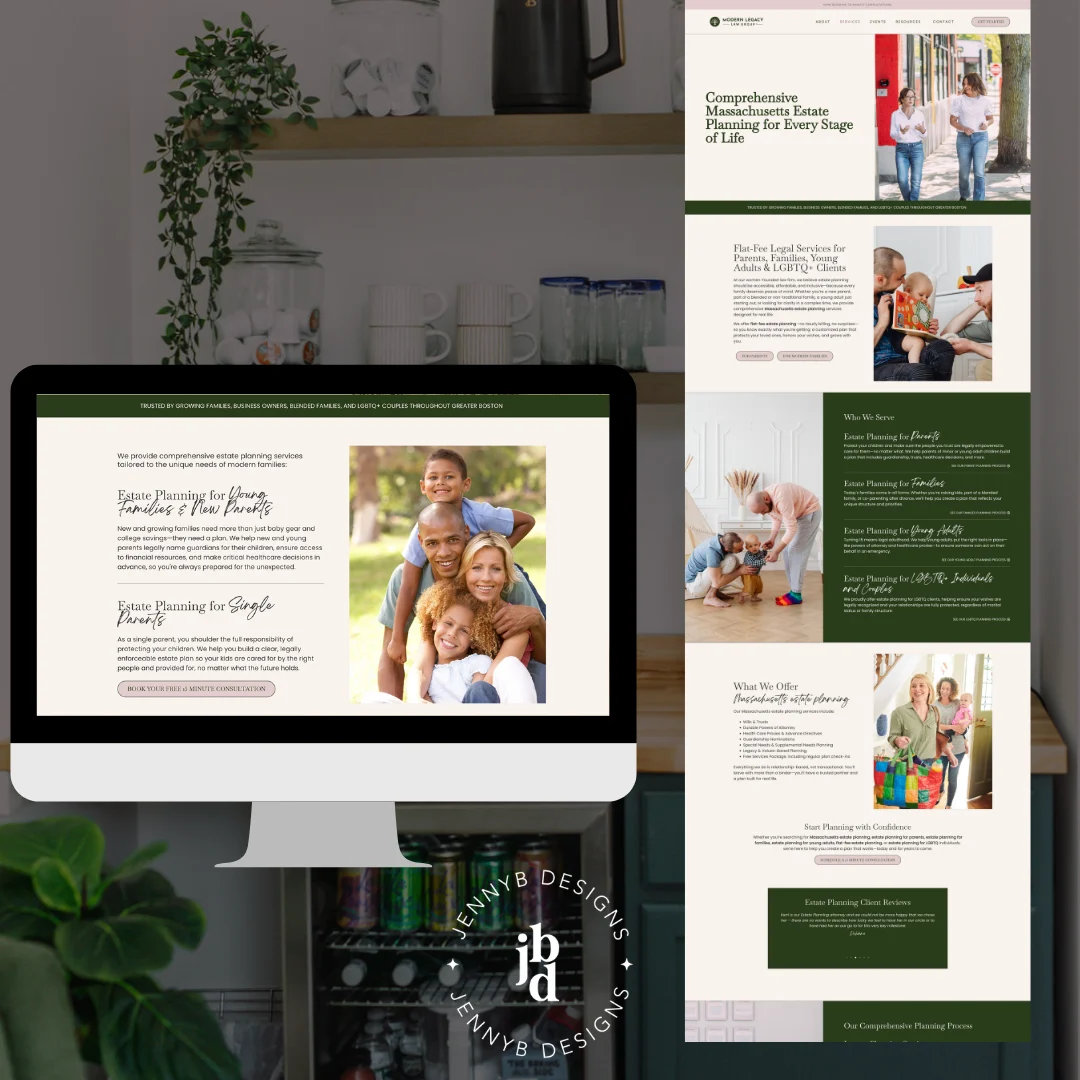
The website structure makes it incredibly easy for visitors to find what they need. Services are clearly outlined, and we created multiple pathways for engagement — whether someone is ready to book immediately or wants to learn more through their free webinar first.
Conversion-Focused Design
Every page includes strategic calls-to-action that feel natural, not pushy. We placed consultation booking buttons at key decision points and used their gorgeous new office photography to showcase the welcoming environment clients can expect.
Photography Integration
Their new professional photos aren’t just beautiful – they’re strategically placed to reinforce trust and approachability. The office shots show the warm, welcoming space clients will visit, while their professional portraits convey expertise without intimidation.
The Result
The new website creates a warm, inviting experience that naturally guides visitors through a thoughtful journey. From initial curiosity to booking that crucial 15-minute consultation call, every design element works to reduce barriers and build confidence in taking the next step.
“Jenny is incredibly talented and intuitive—she’s an excellent listener, hearing what you say you want and reading between the lines to offer functionality and design that you may not have known to ask for. Her process holds your hand through website design so that every detail is covered. We’re so happy with our new and much more functional website!”
Kerri Koen, Modern Legacy Law Group
Does Your Estate Planning Website Build the Same Kind of Trust?
Your firm may be different from Modern Legacy Law Group, but your website visitors are likely arriving with many of the same concerns. They want to know whether you understand their situation, whether the process will feel manageable, and whether they can trust you with decisions that affect the people they love.
A strategic estate planning website should help you:
- Explain complicated services in language clients can understand
- Make the firm feel credible without feeling cold or intimidating
- Help visitors recognize whether your services are right for them
- Answer common questions before the initial consultation
- Give hesitant visitors a lower-commitment way to stay connected
- Guide qualified prospects toward scheduling a consultation
I create custom websites for solo attorneys and small law firms that have outgrown a DIY or outdated site and are ready for something that reflects the quality of their work.
Frequently Asked Questions
Do you only design websites for estate-planning attorneys?
No. JennyB Designs creates custom websites for established service-based businesses, professional firms, and nonprofits. However, working with estate-planning attorneys has given me firsthand insight into the trust, clarity, and sensitivity these websites require.
How long does an estate-planning website redesign take?
Once your content is ready, the focused website design and build takes four weeks. Before the build begins, most clients need approximately two to three weeks to gather copy, photographs, brand materials, and other project content.
Can you help with website copy and branding?
Yes. If your website needs more than design, copywriting, brand identity, and SEO can be incorporated into the project. We will determine what support you need before establishing the scope and timeline.
Can you redesign my existing law-firm website?
Yes. Many clients come to JennyB Designs after outgrowing a DIY or older website that no longer reflects the firm they have built. We will identify what should be retained, what needs to change, and what the new website must do better.
Key Takeaways for Your Estate Planning Website Design
Whether you are running a solo practice or a small firm like Modern Legacy Law Group, a few things tend to hold estate planning website design back from doing the work it should be doing.
The first is leading with services instead of the client. When a visitor arrives on your homepage, they are not thinking about your service menu. They are thinking about their situation. A homepage that opens with what you do, rather than who you help and how it feels to work with you, creates distance before the conversation even starts.
The second is underestimating the role of visual warmth. Estate planning carries weight. People associate it with difficulty, loss, and complexity. A website that leans into formal legal aesthetics can reinforce that association without meaning to. If your firm’s whole point is that this process does not have to feel overwhelming, your estate planning website design needs to say that visually before the words on the page say it out loud.
The third is not giving hesitant visitors anywhere to go. If the only action available on your site is booking a consultation, you are asking for a big commitment from someone who just found you. A free resource, a short webinar, a newsletter, any of these gives a cautious visitor a way to stay connected without having to be fully ready. That second tier of engagement is often where the strongest long-term clients come from.
If any of this is resonating and you are wondering what your own homepage is actually communicating to new visitors, the Homepage Clarity Check Bot was built for exactly this moment. You plug in your homepage and it tells you plainly what is landing and what is getting in the way. It is free and it takes about two minutes. Grab yours here.
Ready for an Estate Planning Website You’re Proud to Share?
Modern Legacy Law Group came in knowing their DIY website no longer reflected the care they brought to every client. They left with a website that feels like their firm: open, thoughtful, professional, and easy to trust.
If your website no longer reflects the quality of your practice, let’s talk about what it needs to communicate—and whether a custom redesign is the right next step.